Choosing equipment for your horse and equestrian practice is like solving a multi-variable equation: the animal’s morphology, the discipline practiced, the rider’s level, and regulatory framework. The items available online often provide generic shopping lists, without distinguishing what pertains to comfort, standardized safety, or adaptation to the terrain. This article compares the selection criteria that truly make a difference when equipping yourself.
Equestrian Safety Standards: What FFE Regulation Requires by Discipline
Most guides group helmets and protective vests into a single “safety” category. However, the French Equestrian Federation (FFE) distinguishes separate standards for each, with separate documents available on its official website. A helmet approved for dressage does not necessarily meet the requirements for eventing (CCE), where impact constraints are more severe.
The FFE publishes specific documents for officials, detailing the accepted standards according to the competition period. Equipment simply labeled “approved” does not guarantee its compliance for the intended use. Before any purchase, it is essential to check the exact standard accepted for the discipline and competition season.
This verification also applies to protective vests. In CCE, wearing a vest is mandatory during cross-country, while it remains optional in other contexts. Consulting official documents before finalizing a purchase helps avoid non-compliant equipment on the day of an event. The catalogs available on equitorne.fr allow filtering equipment by discipline, making this matching process easier.
Comparison of Selection Criteria by Type of Horse Equipment
The table below summarizes the parameters to prioritize for the main equipment categories. Each column reflects a selection criterion that varies according to the type of equipment.
| Equipment | Priority Criterion | Variable by Discipline | Common Pitfall |
|---|---|---|---|
| Helmet | Certification standard | Yes (CCE, dressage, TREC) | Buying solely based on comfort without checking the standard |
| Protective Vest | Required level of protection | Yes (mandatory in cross-country, optional elsewhere) | Confusing cross-country vest with “leisure” vest |
| Saddle | Adaptation to the horse’s morphology | Yes (dressage, jumping, endurance saddle) | Choosing based on aesthetics without checking the tree |
| Saddle Pad | Shape and thickness suitable for the saddle | Partially (shape differs by saddle) | Layering multiple pads to compensate for an ill-fitting saddle |
| Blanket | Weather conditions and horse’s lifestyle | No (depends on the horse, not the discipline) | Blanketing a horse that lives outside year-round unnecessarily |
This table highlights a often overlooked point: the discipline modifies the selection criteria for most equipment categories. Only the blanket escapes this logic, as it depends on the animal’s lifestyle.
Saddle and Horse Morphology: The Gap Between Standard Purchase and Real Adaptation
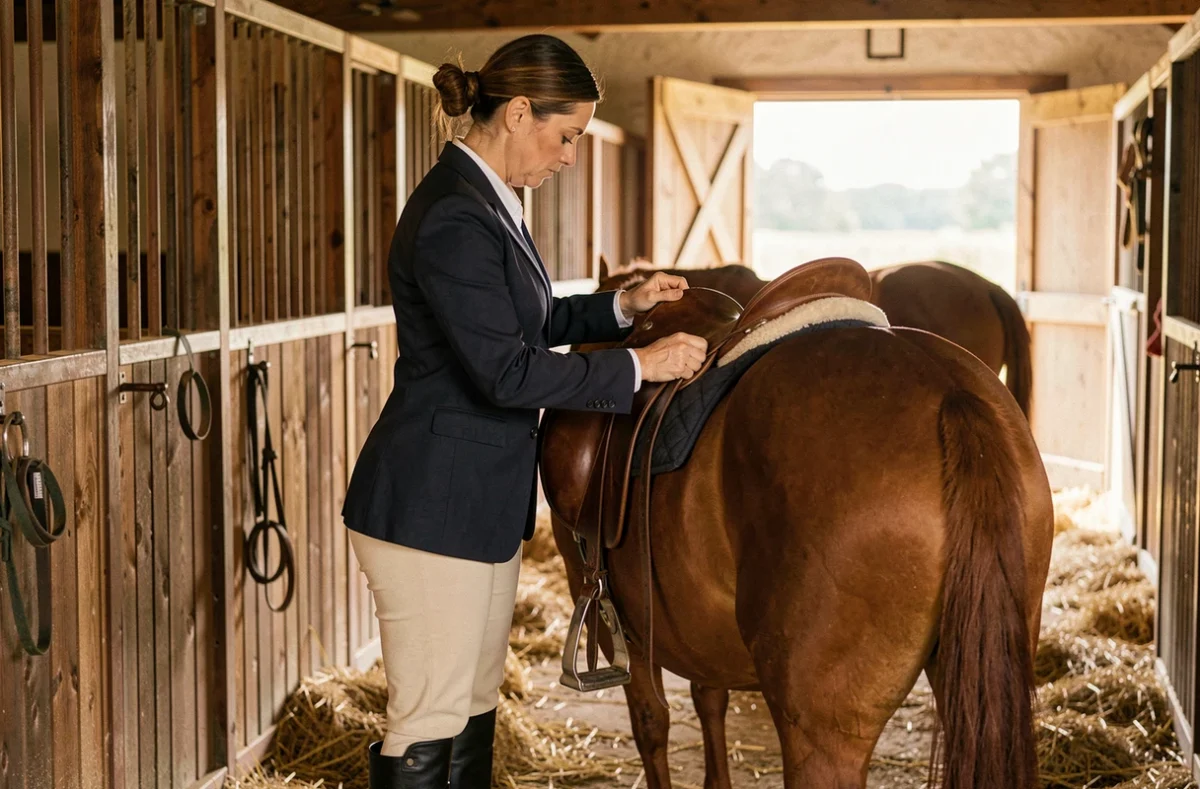
The saddle constitutes the largest portion of the equipment budget. It is also the area where the gap between a generic purchase and a suitable choice has the most visible consequences, both on the horse’s comfort and the rider’s posture.
An ill-fitting tree creates pressure points that can lead to muscle tension or even skin lesions in the medium term. Off-the-shelf saddles are designed based on average templates. For a horse with a prominent withers or a short back, adjustment often requires the intervention of a saddle-fitter or, at a minimum, a trial with prior measurements.
- Check the width of the tree based on the horse’s withers, not just the size indicated by the manufacturer
- Test the saddle in motion (not just at a standstill) to observe pressure points under the pad
- Distinguish between dressage saddle (long flaps, deep seat) and jumping saddle (short flaps, flat seat) before comparing prices
- In TREC or endurance, prioritize a lightweight saddle with attachment points for trail gear
In endurance or TREC, the FFE mandates specific equipment that includes marking and orientation gear. The saddle must allow for the attachment of these elements without unbalancing the rider. This parameter rarely appears in standard buying guides.
Blanket and Protection: Adapting Equipment to the Horse’s Lifestyle
The blanket is an impulse purchase for many owners, sometimes without a real analysis of the need. A horse living outside year-round develops a dense winter coat that provides natural insulation. Blanketing a horse that is not clipped year-round can disrupt its thermoregulation.
In contrast, a horse clipped for winter competition or housed in a stall with limited turnout loses this natural protection. The weight of the blanket must then correspond to local temperatures and the time spent outdoors.
Leg protections (boots, wraps, bells) follow the same logic of adaptation. In jumping, closed boots protect the cannon from impacts against the rails. In dressage, work wraps are sufficient for tendon support. Using oversized protections limits the horse’s proprioception and can mask underlying locomotor discomfort.
- Closed boots: jumping and CCE, where the risk of direct impact is high
- Work wraps: dressage and flat work, for soft support
- Bells: horses that lose shoes or interfere while moving
Quality of Equestrian Equipment: Balancing Budget and Durability
The price of equipment does not always reflect its relevance. A budget saddle pad can work perfectly if the saddle is well-fitted. Conversely, a high-end saddle that is poorly fitted remains a bad investment.
The quality-durability ratio is measured by the frequency of use and the type of demands. A rider who rides three times a week at a club does not have the same needs as an owner who competes regularly. For the former, a properly maintained entry-level piece of equipment can last several seasons. For the latter, investing in durable equipment that withstands frequent washing and repeated transport reduces the cost per use.
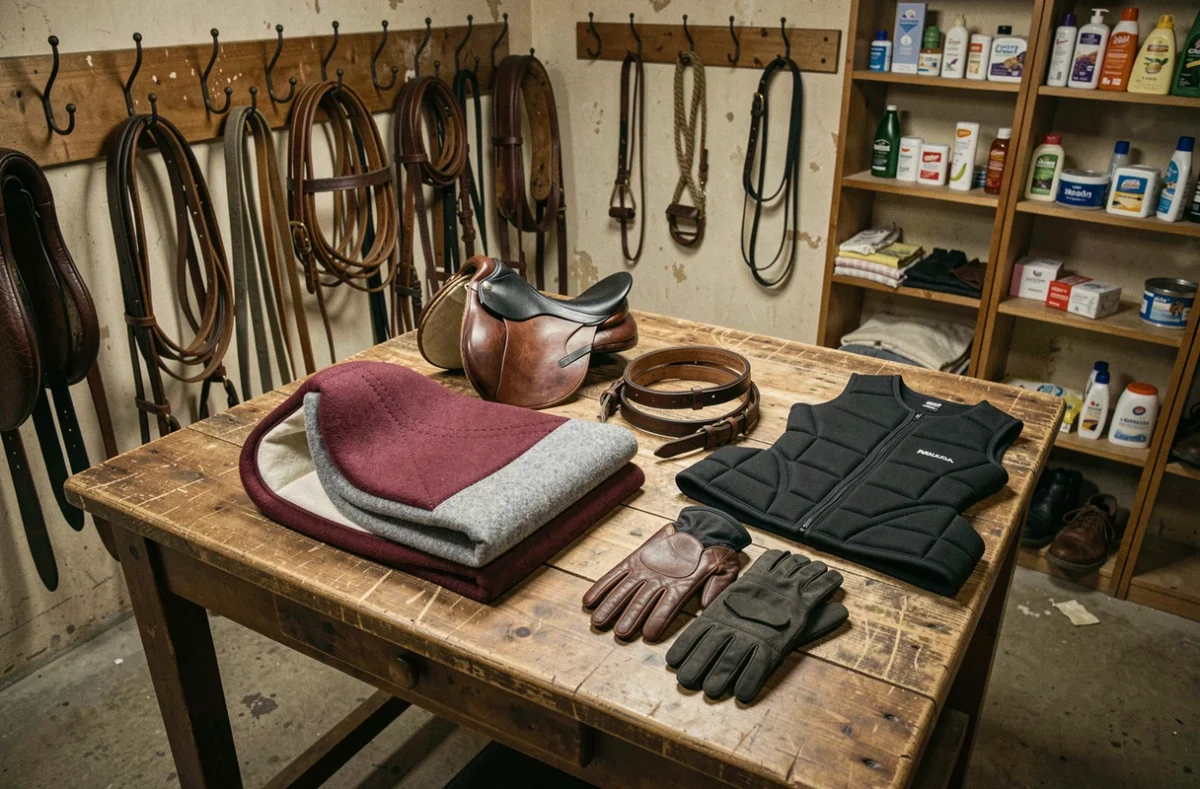
Leather maintenance (saddle, bridle, reins) directly affects longevity. Cleaning after each use and regular conditioning significantly extend the time between replacements. Synthetic equipment, which is easier to maintain, represents a relevant alternative for riders who lack time, without notable penalties on performance.
The choice of equestrian equipment relies on three concrete filters: verified regulatory compliance with the FFE, adaptation to the horse’s morphology (especially for the saddle), and coherence between the level of practice and the budget invested. A well-targeted purchase along these three axes avoids most costly mistakes.