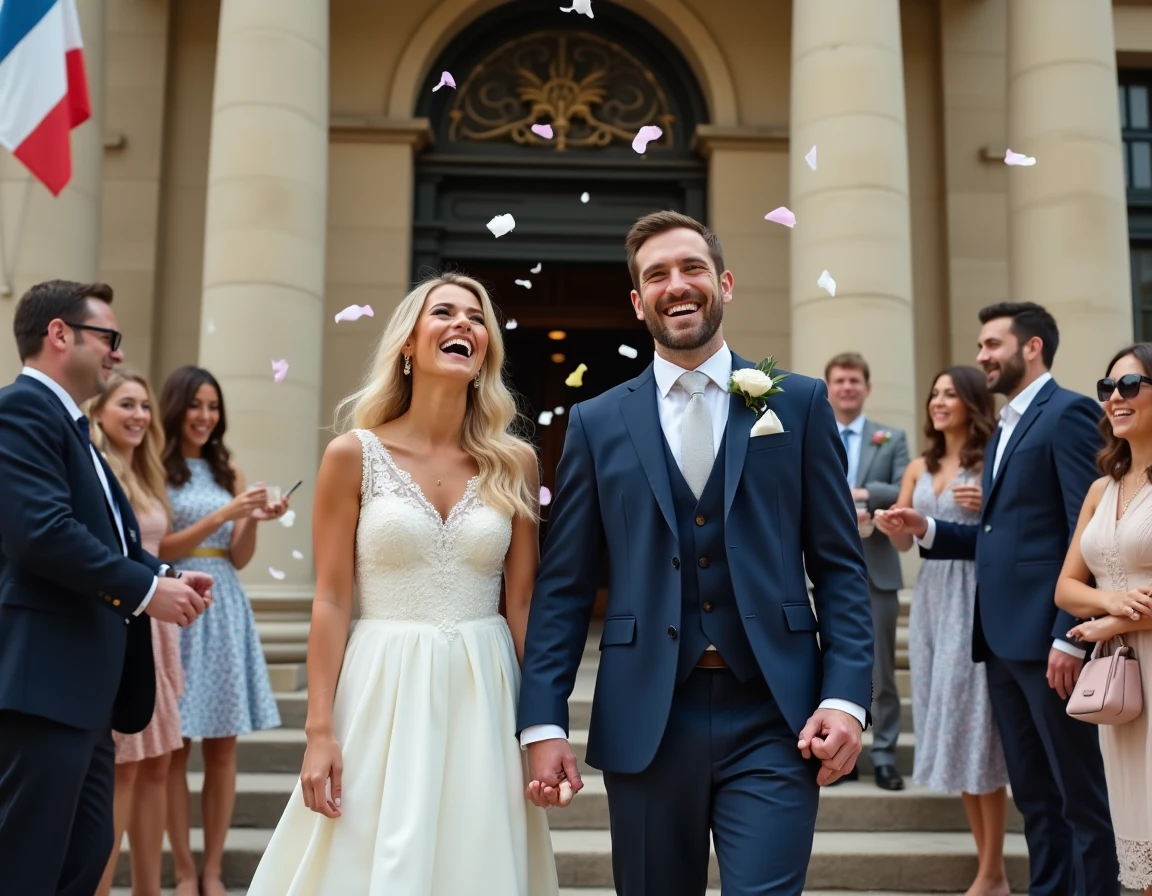
The republican marriage refers to the civil ceremony celebrated at the town hall, the only legally valid act in France to unite two people. By extension, the expression is often associated with the secular ceremony that follows: a symbolic celebration, without a religious framework, entirely designed by the couple. Distinguishing these two moments is the starting point for any successful organization.
Civil ceremony and secular ceremony: two acts not to be confused
The ceremony at the town hall follows the Civil Code. The civil status officer reads the articles of law, collects the consents, and signs the register. The duration rarely exceeds twenty minutes, and the scope for personalization is sometimes limited to the choice of a reading.
The secular ceremony, on the other hand, has no legal value. It takes place after the town hall ceremony (or the next day) and is the moment when the couple tells their story, exchanges their vows, and shares a symbolic ritual in front of their loved ones. It is this second moment that the majority of couples consider the narrative heart of their marriage.
To understand republican marriage with Help Mariage, it is essential to keep this articulation in mind: the civil establishes the law, the secular establishes the emotion.
Secular ceremony officiant: a structuring choice between a loved one or a professional
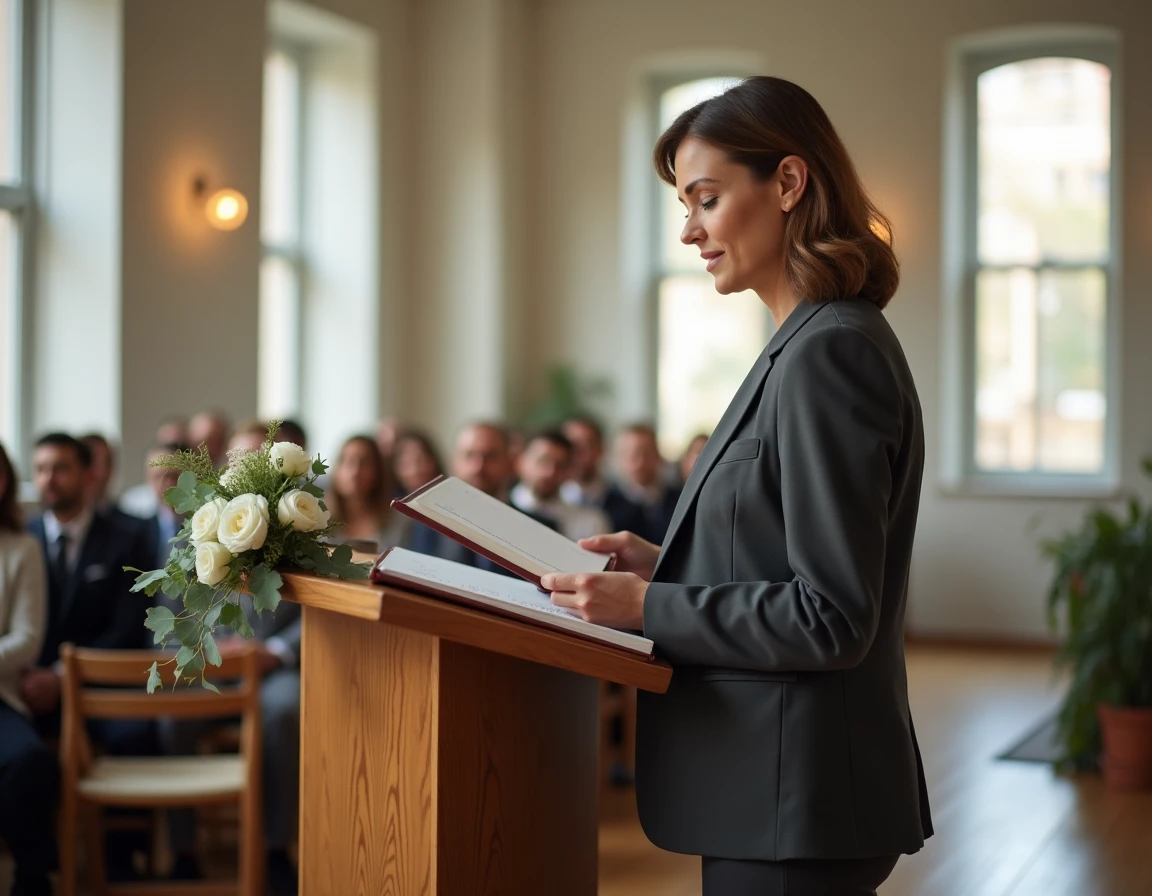
The officiant sets the pace, manages the transitions between speeches, channels the emotion, and handles unexpected events (a malfunctioning microphone, a crying child, a witness paralyzed by nerves). This role is much more technical than it appears.
Entrusting the ceremony to a loved one
Many couples ask a friend or family member to celebrate their secular wedding. The result can be very touching, provided the actual burden is measured. Recent feedback shows that entrusting the ceremony to a loved one without structured preparation can be challenging for that person: emotional pressure, timing management, coordination with service providers.
In recent years, training programs for secular officiants have been structured. They cover ceremony writing, stage presence, and handling unexpected events. A motivated loved one who takes this type of module gains confidence and efficiency.
Hiring a professional officiant
A professional provides a well-established framework: a preliminary interview with the couple, construction of a narrative thread, site rehearsal. Their involvement also frees the loved ones, who can experience the ceremony as guests rather than as pressured coordinators.
The choice depends on the desired level of personalization and the availability of the intended loved one. In both cases, a thorough exchange about the couple’s story remains the foundation of the officiant’s work.
Symbolic rituals for a secular wedding: beyond sand and candles
The ritual punctuates the ceremony with a concrete gesture that anchors the commitment in the sensory memory of the newlyweds and the guests. It is not a decorative accessory but a pivotal moment in the proceedings.
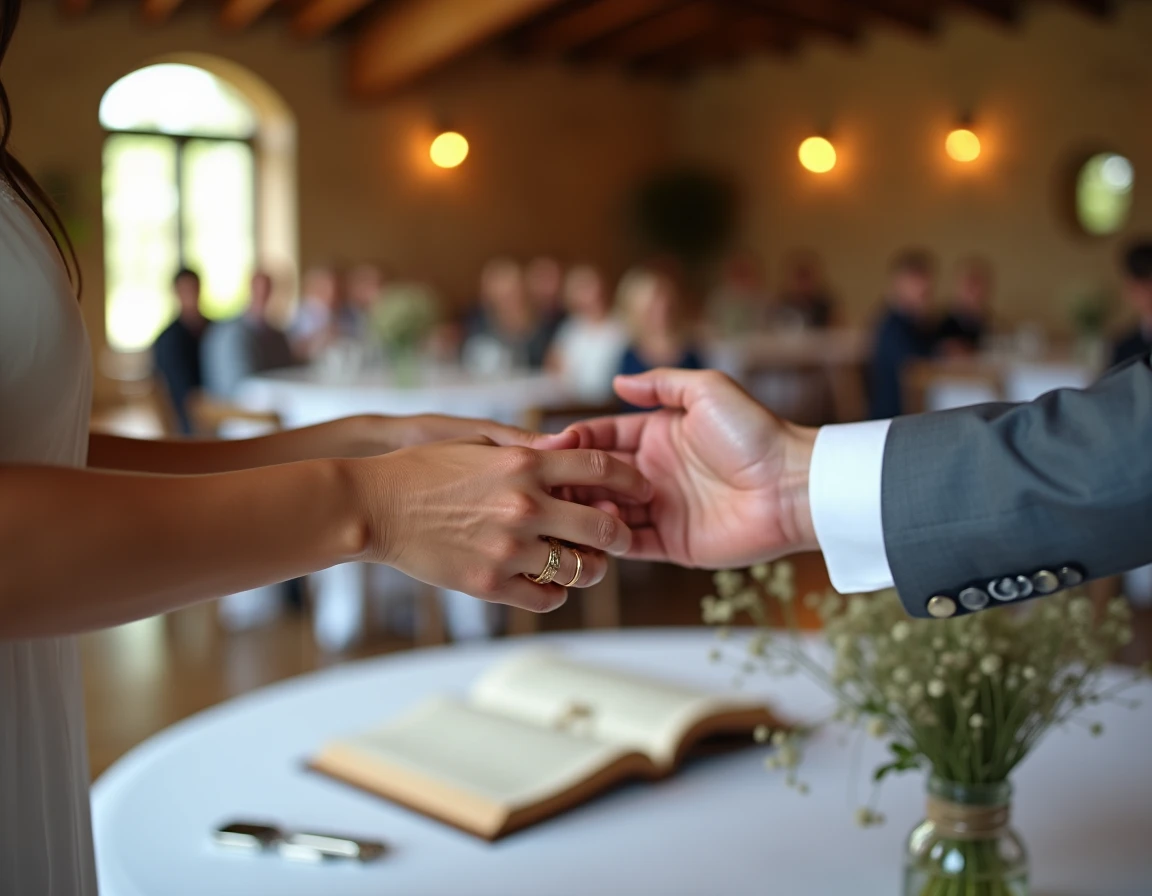
- The ribbon ritual (handfasting): a bond is tied around the couple’s joined hands, with each ribbon chosen by a loved one in a meaningful color.
- Planting a tree or a cutting: the couple each pours soil into a shared pot, a gesture that fits into the green wedding trend and leaves a living memory after the celebration.
- The time capsule: the couple and a few loved ones slip letters, photos, or objects into a sealed box to be opened on an anniversary date.
- The sound ritual: each guest receives a small instrument (bell, triangle) and plays at a given signal, creating a collective soundscape that replaces traditional applause.
The green wedding trend is particularly visible in secular ceremonies, where the freedom of content allows for the integration of committed gestures (zero waste, biodegradable materials, seasonal local flowers).
Writing vows and speeches: structuring emotion
Personal vows are often the most dreaded and anticipated moment. A simple structure helps avoid the blank page syndrome.
Start with a specific memory (a scene, a place, a phrase). Follow with what this memory revealed about the bond. End with a commitment looking towards the future. Two minutes of vows read calmly are worth more than five minutes of nervous improvisation.
For speeches from loved ones, the officiant can set a framework: maximum duration, desired tone, order of speaking. Limiting speeches to four or five interventions preserves the rhythm of the ceremony without frustrating the speakers.
Music and transitions
Music structures the proceedings as much as words. It accompanies the entrance of the procession, supports the silences between two speeches, and marks the couple’s exit. Preparing a playlist tested on the venue’s sound system avoids crackling and silence on the big day.
One last often overlooked point: the site rehearsal. Even a quick one allows for checking distances (aisle, officiant placement, microphone), verifying acoustics, and reassuring the speakers. A thirty-minute rehearsal the day before changes the fluidity of the entire ceremony.