Transporting a pet is not just about getting them into a vehicle. The choice of transport mode depends on specific parameters: the size of the animal, the duration of the journey, the regulations of the carrier, and your companion’s stress tolerance. Each option (car, train, plane) imposes its own constraints, and the rules vary from one operator to another, sometimes even from one country to another on the same route.
Brachycephalic breeds and pressurized cargo: an underestimated risk
The first criterion to examine before choosing a mode of transport is the physiological profile of the animal. Flat-faced dogs (bulldogs, pugs, Pekingese) and certain Persian cats have shortened airways that make them vulnerable to temperature and pressure variations.
Several airlines limit or refuse the transport of these breeds in the cargo hold. Some accept them in the cabin under certain conditions, while others exclude them entirely from their flights. The policy varies from one airline to another, and a refusal discovered at check-in can jeopardize an entire trip.
For a brachycephalic animal, the car remains the mode of transport where you maintain total control over ventilation, temperature, and breaks. The train may be suitable if the animal fits in a container of regulatory dimensions, but a long journey in a closed bag exacerbates breathing difficulties. Specialized pet transport solutions, such as those listed on transpoil.fr, allow for evaluating alternatives suited to your companion’s profile.
Train transport: container dimensions and rules to check segment by segment
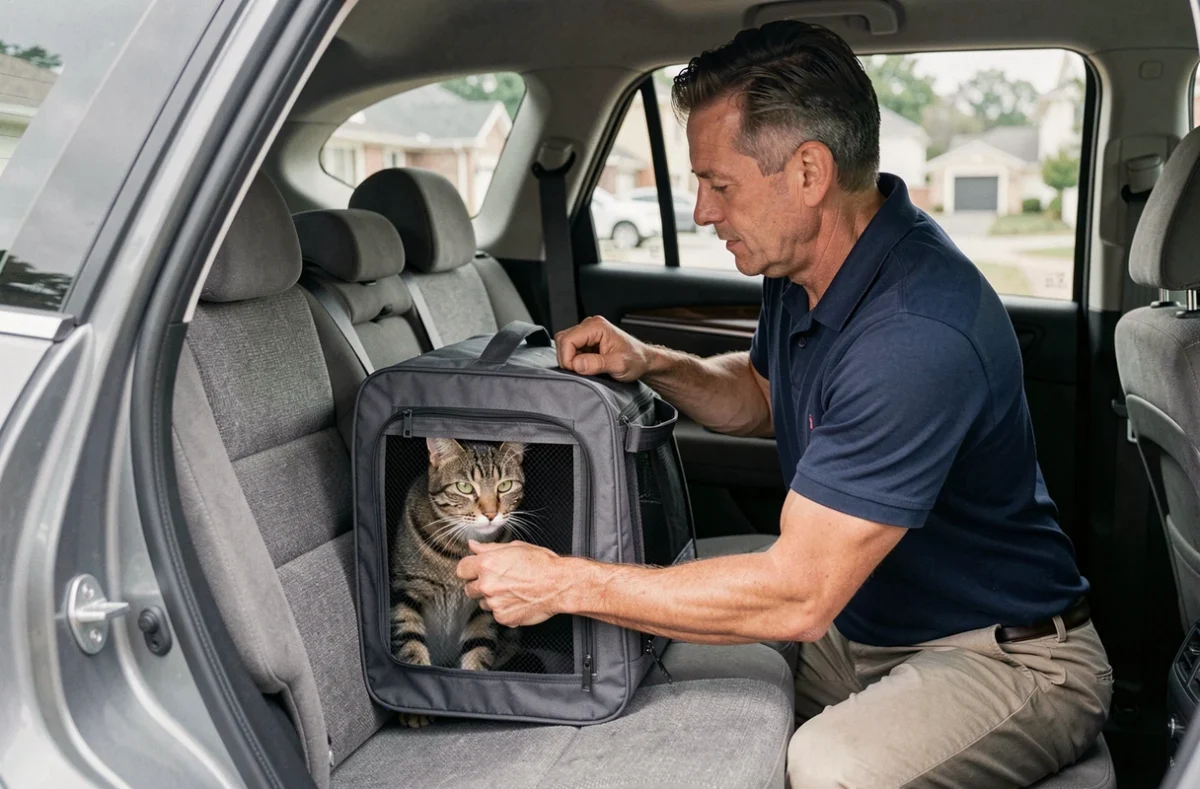
The train seems simple, but its constraints are very specific. At SNCF, a small animal must travel in a closed container of 45 x 30 x 25 cm maximum. A dog that does not fit in this volume must be kept on a leash and wear a muzzle. Each passenger can take up to two animals, with a specific ticket for each.
These rules are not transferable from one network to another. Rail policies differ as soon as a journey crosses a border. Some international services refuse animals except for assistance dogs. Booking a Paris-Barcelona trip thinking to apply SNCF conditions may result in a boarding refusal on the Spanish segment.
What to check before buying a ticket
- The maximum dimensions of the container allowed by each rail operator on the route, not just the first
- The requirement or not for a muzzle for dogs traveling outside a container, which may vary depending on the country crossed
- The possibility of boarding two animals per passenger, as some networks limit it to one
A train journey is well-suited for animals accustomed to confinement and of small size. For a medium-sized dog that struggles with a muzzle for several hours, the car offers more flexibility.
Plane and cabin: the weight limit is not a universal standard
Many travelers remember an eight-kilogram threshold as the limit for traveling in the cabin with a pet. This figure circulates widely, but it is a commercial condition specific to each airline, not an aviation safety standard. The actual threshold, the dimensions of the bag, and the accepted species vary from one airline to another.
Some only allow dogs and cats. Others accept ferrets or rabbits under certain conditions. The type of bag (soft, hard, IATA-approved or not) is also part of the acceptance criteria, and a compliant bag with one airline may be refused by another.
Cargo or cabin: a decision based on the animal’s profile
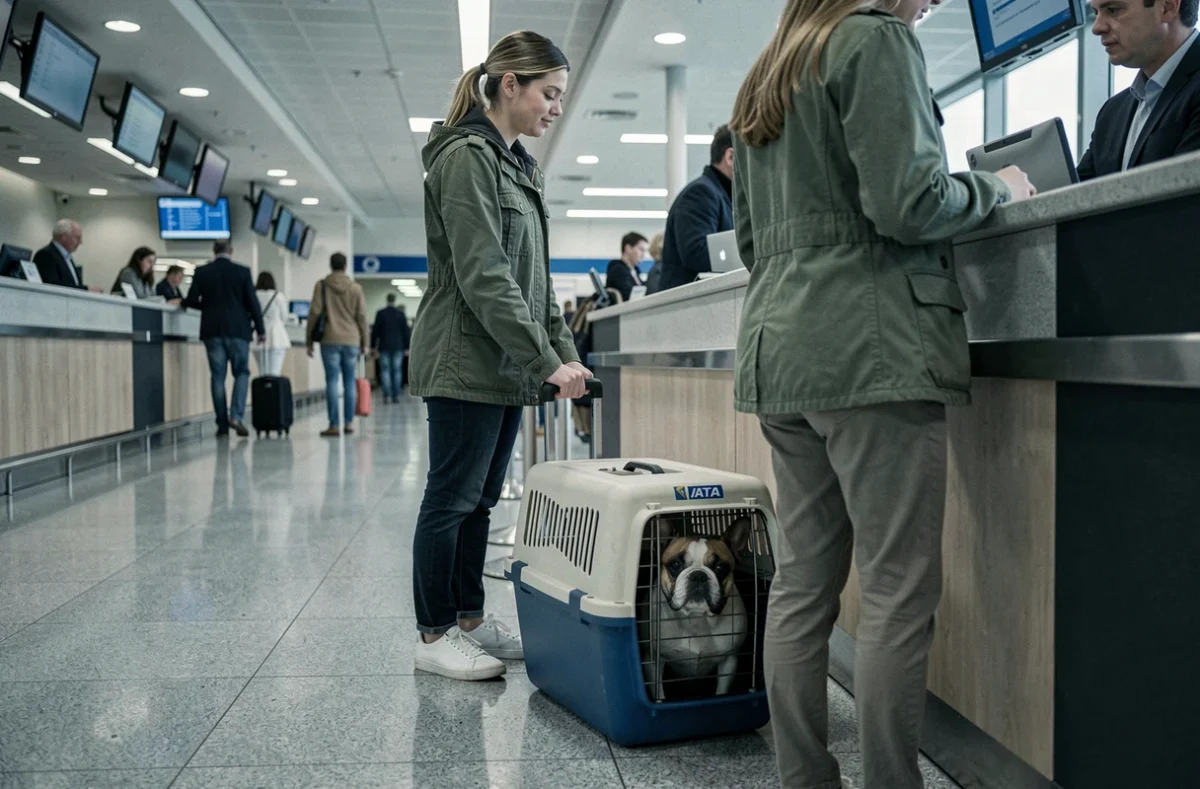
A calm animal, accustomed to staying in a closed bag and weighing below the chosen airline’s threshold, will travel in the cabin without major difficulties. In contrast, a large dog or an anxious animal will need to travel in a pressurized cargo hold, in an IATA-approved crate.
IATA-approved crates meet strict criteria: rigidity, ventilation on at least three sides, secure closure, and sufficient space for the animal to stand up and turn around. The cost of a compliant crate and the stress of traveling in the cargo hold are two factors that field feedback evaluates differently depending on breeds and temperaments.
Car and long journey with a dog: what the regulations really impose
The French highway code does not explicitly impose a type of restraint for animals in cars. However, the driver must maintain their freedom of movement, which makes any animal free to move around the cabin during driving subject to a fine.
Three solutions exist to secure an animal in a car:
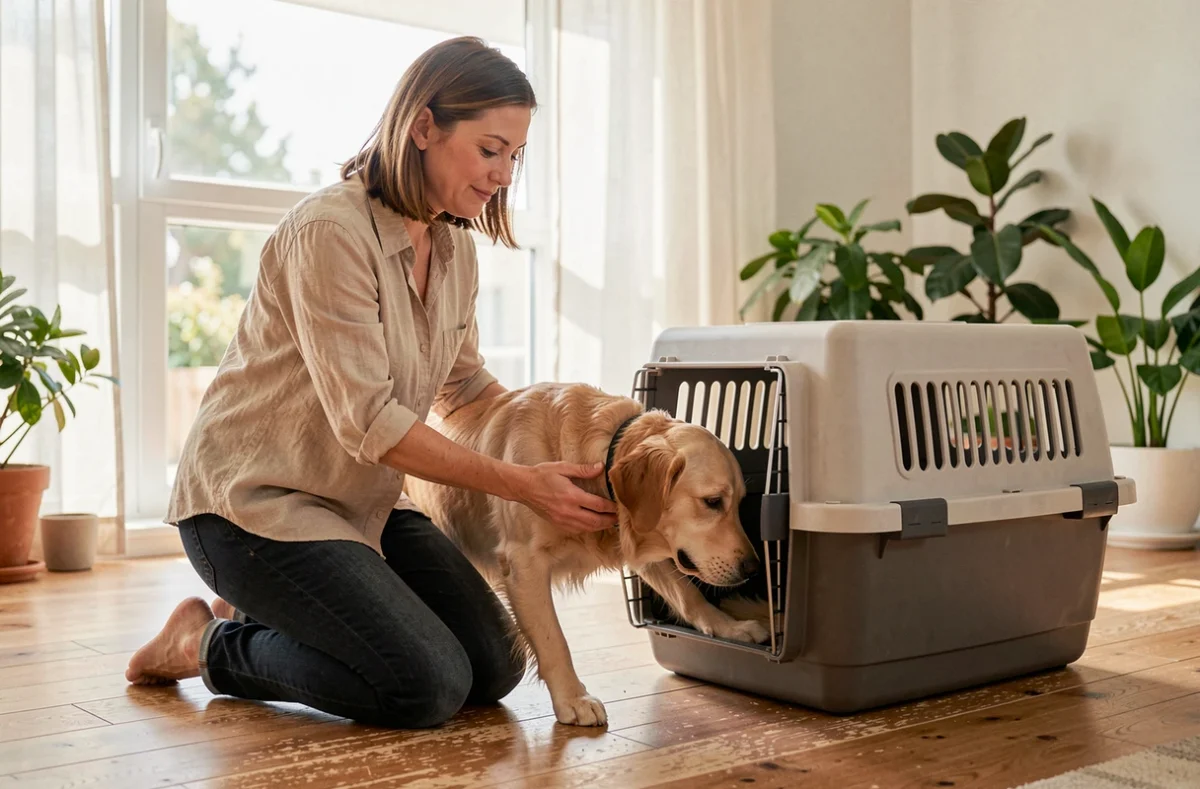
- The transport crate secured in the trunk or on the back seat, suitable for cats and small dogs
- The safety harness attached to the seatbelt, which limits the dog’s movements without fully confining them
- The separation grille between the trunk and the cabin, for large dogs that need space
On a journey of several hours, breaks every two hours or so allow the animal to stretch, drink, and relieve itself. An animal that has not eaten in the hours preceding departure tolerates the journey better, a piece of advice that veterinarians repeat regardless of the chosen mode of transport.
The car remains the most adaptable mode of transport for traveling with a pet. It allows for adjusting the pace to the animal’s behavior and intervening immediately in case of signs of stress or discomfort.
For short to medium journeys with a medium or large dog, no other mode of transport offers this flexibility. Long journeys or distant destinations, however, require seriously weighing the air option, despite its constraints, against the fatigue of a road trip lasting more than ten hours.