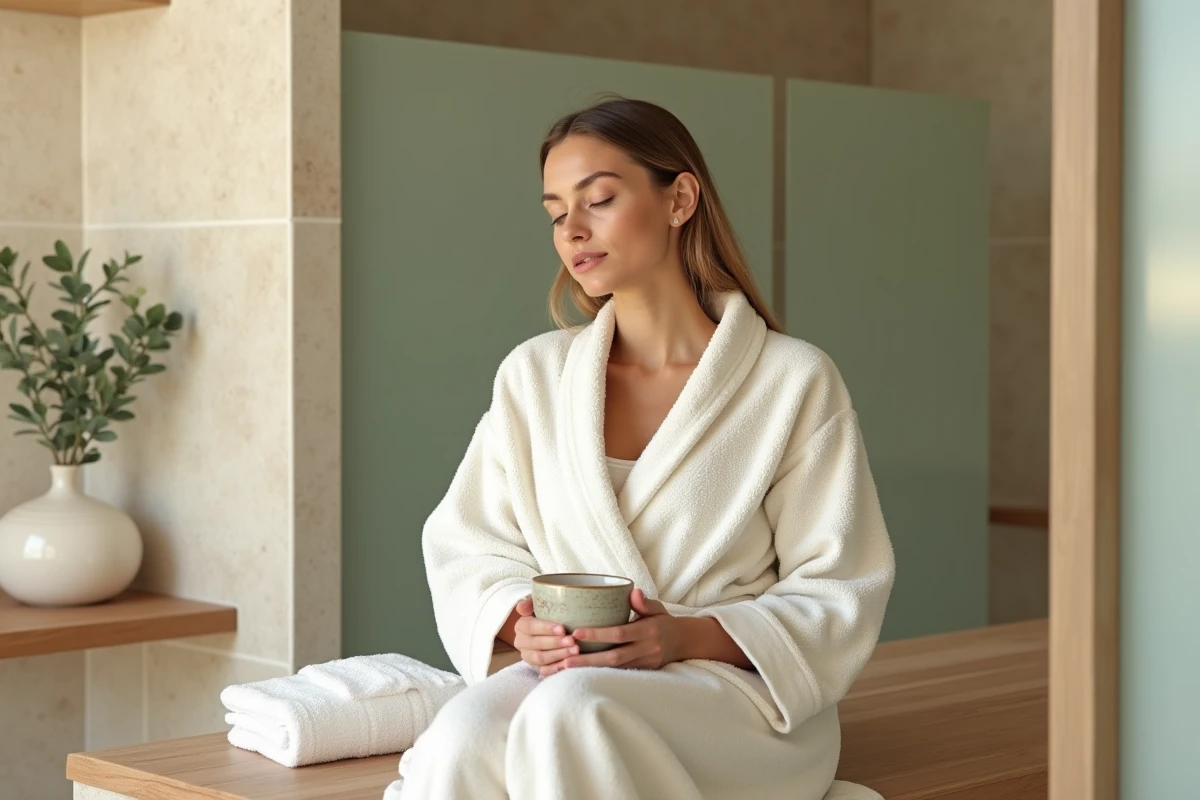
A poorly sequenced spa session can generate more fatigue than relaxation. The water temperature, the order of treatments, and the time of day directly modify the body’s physiological response. Organizing your spa session requires understanding some thermal mechanisms often overlooked in standard guides.
Thermal fatigue after the spa: an underestimated phenomenon
Sequentially moving from a hot bath to a steam room and then to a sauna without breaks causes what specialists call thermal fatigue. The cardiovascular system, continuously stressed by heat, struggles to return to its baseline rhythm if not given a recovery window.
The guidelines from the Finnish Sauna Society and an expert opinion published in the International Journal of Environmental Research and Public Health (Hussain and Cohen, 2018) recommend interspersing neutral temperature breaks, between 20 and 25 °C, rather than moving directly from one heat source to another. These breaks reduce the feeling of post-session exhaustion and improve cardiovascular recovery.
In practical terms, this means sitting for a few minutes in a temperate space, drinking water, and allowing the heart rate to decrease before returning to the jacuzzi or sauna. The goal is not to interrupt the relaxation experience, but to learn more about Pop Your Beauty and respect the body’s ability to regulate its internal temperature.
Evening spa sessions and sleep quality: what research shows
Scheduling your session at the end of the day is not just a matter of availability. A systematic review published in the European Journal of Applied Physiology (Tsuji et al., 2023) shows that a hot bath or immersion in hot water one to two hours before bedtime improves sleep onset latency. This effect has been observed even in individuals with mild insomnia.
The mechanism relies on thermoregulation. Immersion temporarily raises the core body temperature. When exiting the bath, the body dissipates this heat, causing a drop in internal temperature. This drop mimics the natural signal the brain uses to trigger sleep onset.
The target window
The time window is as important as the session itself. Immersing in a spa thirty minutes before bedtime does not allow enough time for the body to begin cooling down. Conversely, a session four hours before bedtime dissipates some of the benefits.
The optimal window is between one and two hours before bedtime. This allows time to dry off, hydrate, and let the body temperature begin its gradual descent.
Spa temperature and session duration: the thresholds to know
Most guides recommend water temperatures between 35 and 38 °C for standard jacuzzi use. This range corresponds to the zone where muscles relax without excessively stressing the cardiovascular system.
- Below 35 °C, the water provides a lukewarm sensation that limits the effect of deep muscle relaxation but is better suited for prolonged sessions or for those sensitive to heat.
- Above 38 °C, the duration of the session should be shortened. Do not exceed 39.5 °C: beyond this, the risks of discomfort, drops in blood pressure, and skin reactions significantly increase.
- For water between 36 and 38 °C, a duration of twenty to thirty minutes is a reasonable guideline. Field reports vary on this point depending on individual fitness levels, but staying attentive to the body’s signals (dizziness, palpitations) remains the most reliable rule.
Order of treatments in a complete spa journey
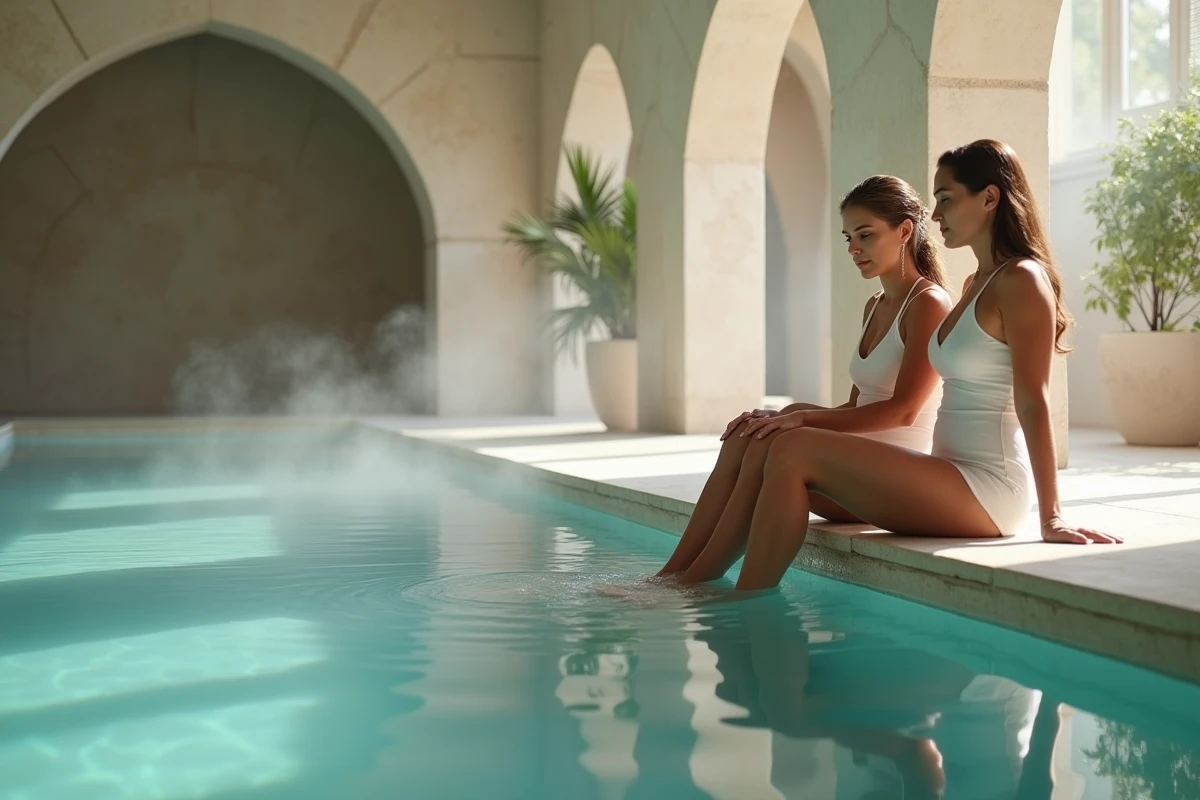
When the spa includes a steam room, sauna, and hot tub, the sequence influences comfort and the benefits felt. The challenge is to gradually increase thermal intensity rather than starting with the hottest.
Recommended progressive sequence
Starting with the steam room exposes the body to moderate humid heat. The steam opens the pores and prepares the skin without causing thermal shock. Moving on to the sauna, where the dry heat is more intense, further challenges thermoregulation but on an already acclimated body.
Ending with the hot tub allows for a combination of muscle relaxation and recovery. The water jets massage tense areas while the temperature, slightly lower than that of the sauna, gradually brings the body back to a state of rest.
- Between each step, take a break of five to ten minutes at room temperature.
- Drink still water between each hot phase, in small regular sips, not in large quantities at once.
- Avoid cold showers between each treatment if relaxation is the primary goal. The abrupt thermal contrast stimulates the sympathetic nervous system, which reactivates alertness rather than relaxation.
When the hot-cold contrast makes sense
The hot-cold alternation remains relevant for sports recovery or to stimulate blood circulation. In this case, a brief passage under a cool shower after the sauna activates vasoconstriction, then returning to a warm area reinitiates vasodilation. This vascular “pumping” promotes the elimination of metabolic waste in the muscles.
However, if the goal is relaxation or improving sleep, the hot-cold alternation can be counterproductive. It is better to maintain a gentle progression towards rest.
Hydration and nutrition before a spa session
The heat of the spa causes significant sweating, even when it is not directly perceived in the water. Arriving dehydrated for your session increases the risk of headaches and dizziness.
Drinking one to two glasses of water in the hour leading up to the session is a minimum. During the session, keeping a water bottle nearby allows for continuous compensation of losses.
On the nutrition side, a heavy meal just before the session diverts some of the blood flow towards digestion, which reduces the effectiveness of muscle relaxation and can cause nausea. Allowing at least an hour between a meal and immersion remains a simple precaution that significantly changes the comfort experienced.
The spa remains a wellness tool whose effects largely depend on how one structures their session. Temperature, duration, order of treatments, and time of day form a coherent whole. Adjusting these parameters to one’s own bodily reactions yields clearer results than following a rigid protocol applied in the same way by everyone.